The emergency room crisis we can no longer ignore

PUBLISHED: April 26, 2026 | www.baltimoresun.com
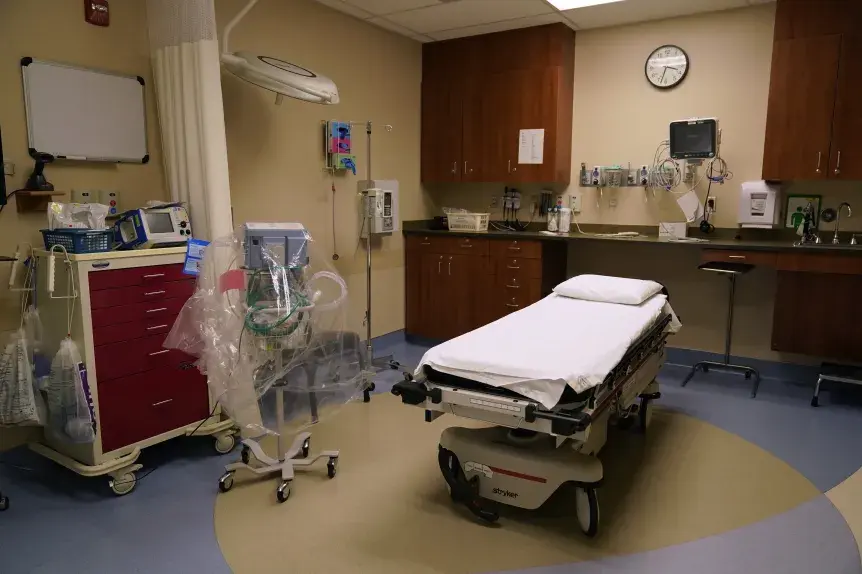
There is a quiet crisis unfolding across American healthcare, one that rarely makes headlines but is felt every day by patients, families and frontline medical professionals.
Patients are spending days in emergency room hallways, not because care is unavailable, but because the system itself is strained and misaligned.
Hospitals are full. Beds are rationed. High-margin procedures often take priority over unpredictable emergency admissions. And in major cities, another reality is adding pressure: a surge of patients, many newly arrived or without traditional access to care, relying on emergency departments as their primary point of entry into the healthcare system.
But the strain does not begin in the emergency room.
Physician offices are crowded as well. Patients wait weeks, sometimes months, for appointments with primary care doctors and specialists. Preventive care is delayed. Routine issues escalate. And when timely access fails upstream, patients do what they must: They go to the emergency room.
The result is not theoretical. It is visible.
Delayed care. Medical errors. And, most troubling, a loss of dignity in life’s most fragile moments.
This is not simply inefficiency. It is a system under stress.
America has some of the most advanced medical capabilities in the world. Yet increasingly, patients are left waiting on stretchers in crowded hallways, caught in a kind of medical limbo, admitted, but not placed; treated, but not stabilized; present, but not fully seen.
To understand this crisis, we must begin with how the system is structured.
Emergency rooms were designed to stabilize acute conditions, not to function as long-term holding areas. But when inpatient beds are unavailable, often due to staffing shortages, financial pressures or prioritization of scheduled procedures, patients back up into the ER. This phenomenon, known as “boarding,” has become commonplace.
At the same time, emergency rooms have become the default access point for many who lack regular pathways into the healthcare system. That includes uninsured individuals, underinsured families, and yes, a growing number of migrants who arrive without established relationships with primary care physicians or specialists.
The emergency room, by law and by principle, does not turn people away.
That is a reflection of who we are as a country.
But compassion without capacity creates consequences.
When emergency departments are used for non-emergent needs — routine ailments, minor conditions, issues better handled in urgent care or primary care settings — it contributes to congestion that affects everyone. Critically ill patients wait longer. Physicians and nurses are stretched thinner. Decisions are made under pressure. The margin for error narrows.
Anyone who has spent time in a busy hospital setting has seen it firsthand: hallways lined with patients, physician offices overbooked, waiting rooms filled, staff moving at an unsustainable pace and families waiting anxiously for care that comes too slowly.
This is not a failure of effort. It is a failure of alignment.
Layered onto this is the economic reality of healthcare.
Hospitals operate under immense financial pressure. Reimbursements vary widely. Elective procedures, often more predictable and profitable, help sustain operations. Emergency care, by contrast, is unpredictable and frequently undercompensated, particularly when patients are uninsured or unable to pay.
Insurance companies add another layer of complexity, with authorization requirements, reimbursement disputes and administrative burdens that consume time and resources. Government policies, while often well-intentioned, can further complicate the flow of care, especially when funding structures do not match real-world demand.
The result is a system where access technically exists, but timely, efficient care does not always follow.
That distinction matters because access without delivery is not enough.
It is tempting to reduce this issue to a single cause or a single population. That would be a mistake. The pressures on emergency rooms and now physician offices are cumulative: demographic shifts, workforce shortages, hospital consolidation, reimbursement models and increased demand across the board.
The role of migrant care is part of that picture, particularly in high-volume urban hospitals, but it is not the only factor. Nor can it be addressed in isolation without confronting the broader structural challenges.
What is needed is clarity. First, capacity must be addressed. That means more staffed beds, expanded physician networks and better coordination between emergency departments and inpatient units. It also requires strengthening outpatient care so physician offices are not overwhelmed and patients are not pushed downstream into crisis care.
Second, access points must be diversified. Expanding urgent care, telemedicine and community-based clinics can relieve pressure across the system.
Third, incentives must be realigned. Payment systems should reward efficiency, early intervention and appropriate use of care, not simply volume or procedure type.
Fourth, accountability must extend across the system, from insurers to hospital administrators to policymakers.
And finally, we must be honest about the balance between compassion and sustainability.
We are a nation that believes in treating those in need. That principle should not change. But neither can we ignore the strain placed on a system already operating at its limits. Solutions must reflect both values: humanity and realism.
Because what is happening now is neither sustainable nor acceptable.
The emergency room should be a place of urgency, not endurance. A place where care begins, not where it is delayed.
If we continue on the current path, the gap between what American healthcare promises and what it delivers will only widen.
The warning signs are already here in crowded ER hallways, overbooked physician offices, exhausted staff and patients waiting far too long for the care they need.
Watch the system. Watch the incentives. Watch the capacity.
That’s where the truth lives.


Comments