The global upheavals beneath the surface

PUBLISHED: May 16, 2026 | www.baltimoresun.com
“Things are seldom what they seem,” observed Gilbert and Sullivan in “H.M.S. Pinafore” nearly 150 years ago. Few places prove that truth more vividly than the modern Middle East.
War distorts everything. Truth becomes negotiable. Propaganda flourishes. Governments carefully shape public perception while citizens struggle to understand what is truly unfolding beneath the headlines. During conflict, dissent is often branded disloyal, while the public is reassured that peace is near, even when the underlying realities suggest otherwise.
Today, Americans hear almost daily about ceasefires, negotiations, temporary truces, humanitarian corridors or possible diplomatic breakthroughs involving Iran, Gaza, Lebanon, Israel and the Gulf states. Yet beneath the surface, the region appears far closer to a dangerous long-term realignment than to lasting peace.
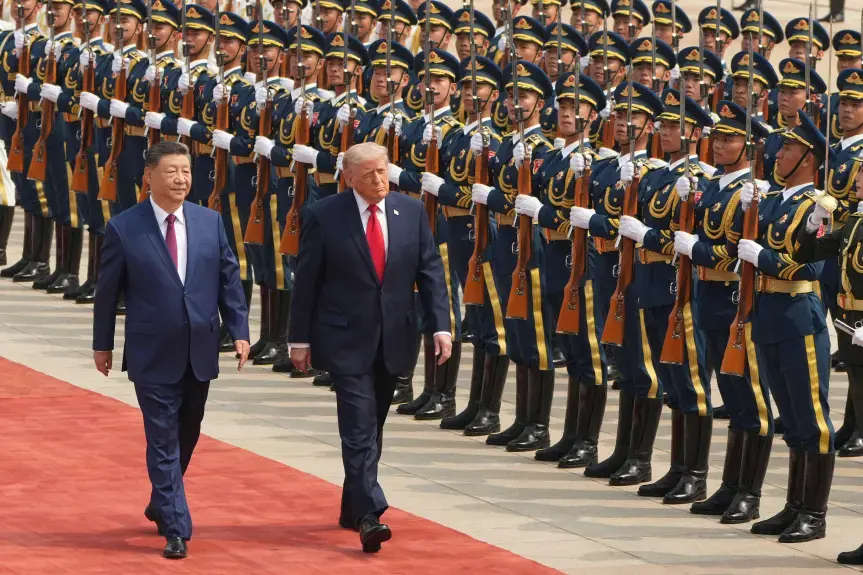
The recent Trump-Xi summit only deepens those concerns.
While global attention focuses on tariffs, trade disputes and economic competition, another far more consequential issue quietly hovers in the background: the expanding strategic relationship between China and Iran. Reports and intelligence discussions continue to circulate within diplomatic and defense circles regarding Chinese commercial networks, intermediaries and businessmen potentially facilitating the transfer of military technology, weapons components, drones, surveillance systems or dual-use materials capable of strengthening Iran’s military infrastructure.
Whether officially sanctioned by Beijing or pursued through quasi-private commercial channels, the implications are profound. Modern geopolitical conflict no longer operates through traditional alliances alone. Nations increasingly leverage private actors, state-connected industries, cyber capabilities, energy dependence and proxy relationships to project power while maintaining plausible deniability.
This is the new shadow battlefield of the 21st century.
At the center remains Iran’s determination to preserve strategic leverage in a hostile region. Washington insists Tehran permanently abandon any nuclear weapons capability. Iran, however, sees the world through a very different lens.
From Tehran’s perspective, surrendering strategic deterrence could invite regime vulnerability. Iranian leaders study history carefully. They remember Iraq. They remember Libya. They remember the CIA-backed overthrow of Prime Minister Mohammad Mosaddegh in 1953. They watched Ukraine surrender nuclear weapons under the Budapest Memorandum, only to later face invasion and territorial seizure.
Nations draw conclusions from history, whether America approves of those conclusions or not.
This is why simplistic assumptions about imminent peace often collapse under scrutiny. The ideological, religious, territorial and geopolitical fractures across the Middle East remain immense. Israel has existed in a near-permanent state of conflict since its founding in 1948. Decades later, tensions continue to simmer across Gaza, Lebanon, Syria, the West Bank and now increasingly within broader regional power structures involving Iran and its proxies.
Meanwhile, China’s role grows steadily more consequential.
Beijing understands that instability in the Middle East directly impacts global energy markets, shipping lanes, inflation and America’s strategic bandwidth. A prolonged regional conflict weakens Western cohesion while creating opportunities for China to expand economic and diplomatic influence throughout the Global South.
That reality should concern Americans far more than the daily social media outrage cycle.
The modern battlefield is no longer confined to tanks, missiles and fighter jets. It now includes supply chains, semiconductor dominance, rare earth minerals, cyber warfare, artificial intelligence, shipping routes, energy leverage, disinformation campaigns and commercial partnerships disguised as ordinary business transactions.
And perhaps most unsettling of all is this: Many of these upheavals are unfolding while ordinary citizens across the world continue attempting to live normally, work normally and consume headlines as entertainment, much like Europe did before earlier global conflicts spiraled beyond containment.
History repeatedly teaches the same painful lesson. The greatest geopolitical shifts are often barely understood while they are happening.
Things are seldom what they seem.
Armstrong Williams (www.armstrongwilliams.com; @arightside) is a political analyst, syndicated columnist and owner of the broadcasting company, Howard Stirk Holdings. He is also part owner of The Baltimore Sun.
©️ 2026 Baltimore Sun


Comments